If you're cleaning your gutters before the snow flies and finding what looks like coarse sand, that's your roof talking. Those are the mineral granules from your asphalt shingles, and they do more than give your roof its colour. They shield the asphalt underneath from the sun and the weather.
A Little Is Normal. A Lot Is a Warning.
New roofs shed loose granules left over from manufacturing for a while, and a slow trickle over the years is ordinary wear. What isn't normal is a heavy buildup in the gutters, piles at the bottom of your downspouts after a rain, or dark, bald patches you can spot from the yard.
You don't need to climb up to check. Look in three places:
- Gutters and downspouts — sandy, grit-like buildup is the clearest early sign.
- The ground below your downspouts — granules collect there after a rain.
- The roof itself, from the ground — dark or bald patches where the black asphalt shows through.
Why It Hits Hard in the East Kootenay
Cranbrook is one of the sunniest places in BC, and that's hard on shingles. Add our summer hailstorms, big temperature swings, and long winters, and East Kootenay roofs take more of a beating than most. Sun and heat dry out the oils that hold the granules in place, and hail knocks them off directly. Age, foot traffic on the roof, and shingles nearing the end of their service life all add to it.
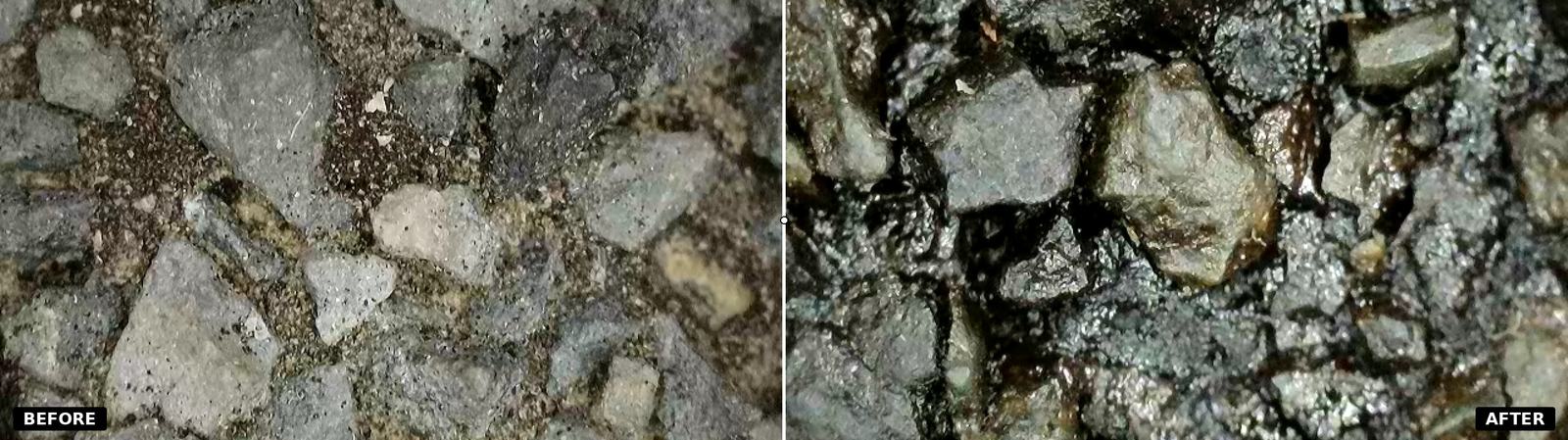
Under the microscope: loose, worn granules on an untreated shingle (left) versus a Gonano-treated shingle (right). More in our project gallery.
Why It Matters
Once the granules are gone, the exposed asphalt dries out, hardens, and cracks faster, which loosens more granules. It's a cycle that speeds up the longer it's left.
What to Do About It
- New roof: some early shedding is fine. Keep an eye on it.
- Sudden loss after a storm: get it inspected. Storm damage may be repairable or covered by your insurance.
- Gradual loss on an older but sound roof: this is the ideal window for roof rejuvenation. As a certified Gonano contractor, we apply a nano-silica treatment that replenishes the oils aging shingles lose and reinforces the shingle from within, backed by a transferable manufacturer warranty of up to 20 years.
Not sure which one you're looking at? That's what our free roof assessment is for. We cover the East Kootenay, from Cranbrook and Kimberley to Fernie, Invermere, and Creston, and you don't need to get on a ladder. We'll take a look, drone included, and tell you straight whether it's normal wear or time to act.
Want the Full Breakdown?
This is the short, local version. For the complete guide, including the causes in more detail and the independent testing behind the treatment, read Gonano's article: Asphalt Shingle Granule Loss: What It Means and What to Do.
Frequently Asked Questions
Is it normal to find shingle granules in my gutters?
Some is normal. New roofs shed loose granules left over from manufacturing, and a slow trickle over the years is ordinary wear. Heavy buildup in gutters, piles below downspouts, or bald patches on the roof are not normal.
What causes shingle granule loss?
Age and the loss of the oils that hold granules in place, sun and heat, hail and storms, foot traffic on the roof, and shingles reaching the end of their service life.
How do I check for granule loss without climbing on the roof?
Look in your gutters and downspouts for sandy grit, check the ground below downspout outlets after a rain, and look at the roof from the yard for dark or bald patches where black asphalt shows through.
Can a roof that is losing granules be restored instead of replaced?
Often, yes, if the roof is aging but still structurally sound with no active leaks. If the exposed asphalt has already cracked across much of the roof, replacement is the right call.